


Twist-off, button & co.: The comprehensive guide to choosing the right lid for preserving
Whether you’re making jam, compote or pickled vegetables, anyone looking to preserve food needs the right accessories. Above all, choosing the correct lid is crucial for a safe and successful preserving process. However, with the wide range on offer, terms like “sterilisable” and “pasteurisable” soon appear, and the choice between twist-off lids with or without a button can also raise questions. In this guide, you’ll learn about the differences, which lids are suitable for which purpose, and what you should pay attention to when preserving. This way, you’re guaranteed to find the perfect solution for your individual preserving projects!
Pasteurisable vs. sterilisable
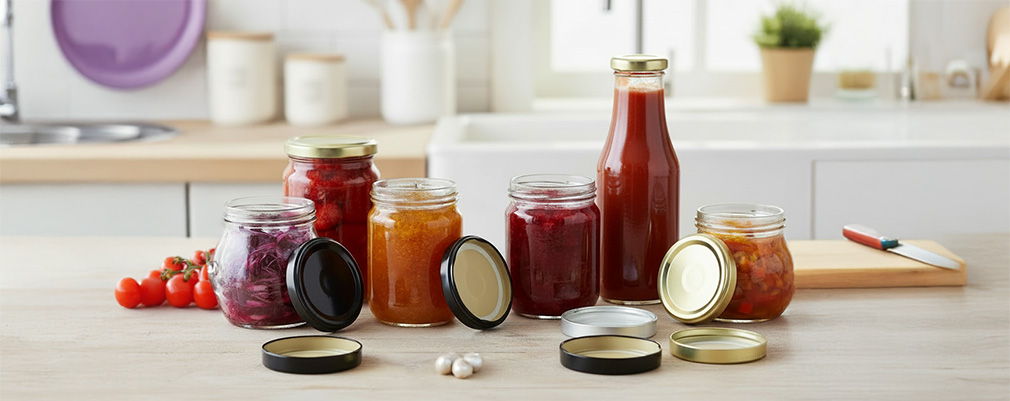
When it comes to preserving and canning food, the choice of lid plays an important role. Two terms that frequently crop up are “pasteurisable” and “sterilisable”. But what’s the actual difference?
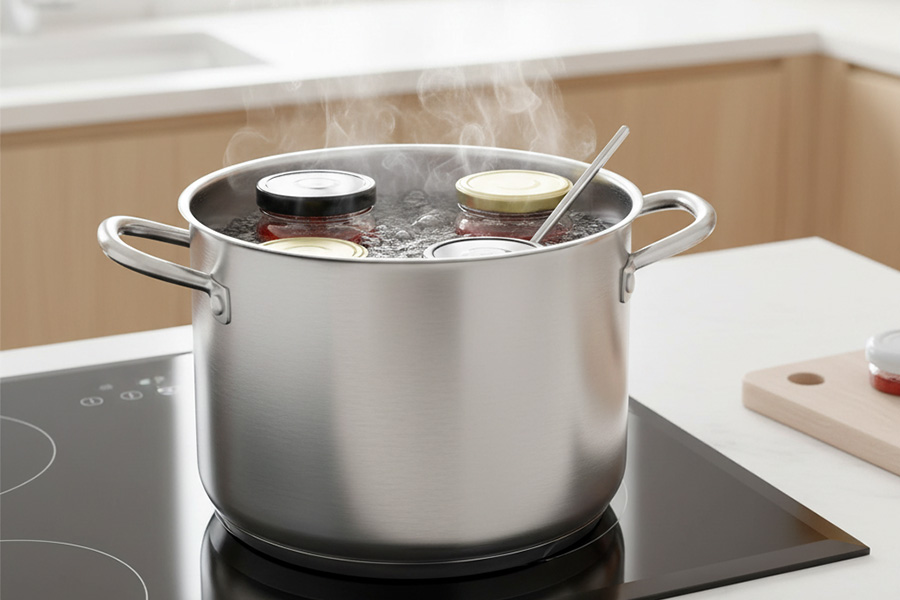
Pasteurising means heating food to around 100 °C – usually just until water reaches boiling point under normal conditions. This method is suitable for jams, sauces or pickled vegetables, and ensures that many microorganisms are destroyed. The shelf life of your products is significantly extended, without losing flavour or texture.
Sterilising goes a step further: here, food is heated under pressure to temperatures of about 120 °C. This is particularly useful when you want especially long shelf life or an even higher level of hygiene – for example, with delicate foods or in commercial production.
Which lids are suitable for pasteurising and sterilising?
The key difference between pasteurisable and sterilisable lids lies in the material of the seal.
- Pasteurisable lids have a soft and flexible seal, which adapts well at lower temperatures and is usually more than sufficient for home use.
- Sterilisable lids, on the other hand, have a harder and more heat-resistant seal, which can withstand the high temperatures involved in sterilising.
For home preserving, especially without a dedicated pressure canner, pasteurisable twist-off lids are generally the best and most straightforward choice.
What are twist-off lids?
Twist-off lids are a practical and widely used closure for jars and bottles. Their defining feature: they are opened and closed with a simple twist (a quarter turn) – hence the name “twist-off”. The lid grips securely onto the thread of the glass container and, with the help of a special seal, creates an airtight closure.
Alongside twist-off lids, there are other types of closures suitable for various uses. These include classic screw caps and swing-top closures, which are especially popular for preserving jars and traditional bottles. Crown caps, corks or special pouring lids are also used, depending on the product and intended use. This means there’s a suitable closure for every type of preserve, drink or sauce – to suit your needs and personal preferences.
Twist-off lids: with or without button?
Twist-off lids come in two versions: with or without a so-called “button”. The button is a flexible area in the centre of the lid, which is drawn inwards by the vacuum created as the jar cools. This practical feature offers several advantages: the button acts as a reliable vacuum indicator and shows at a glance whether the jar is securely sealed. It provides an extra freshness and safety check, which is especially reassuring for home use. Button lids are also easy for consumers to identify and check. In contrast, non-button lids do not have this vacuum indicator. They are usually more affordable and are often used in industrial packaging, where visual checks by the end customer are less important.
Buy the right lids now in the World of bottles online shop
At World of bottles, you’ll find a wide selection of high-quality twist-off lids with button, all pasteurisable and therefore ideal for processing at lower temperatures. Our lids are particularly easy to use and offer reliable protection for your homemade delicacies. Discover our range of matching jars and closures now – and start your next preserving project perfectly equipped!
Frequently asked questions about twist-off lids
The difference usually lies in the sealing material: sterilisable lids have a harder, more heat-resistant seal, while pasteurisable lids have a softer, more flexible seal. You’ll find this information in the product description.
Pasteurisable lids are ideal for jams, compotes, sauces, preserved fruit and vegetables, and many other recipes that are processed at temperatures up to around 100 °C.
No, pasteurisable lids are not suitable for the higher temperatures of sterilising and may become leaky. Only use lids specifically designated for sterilising.
The button is a flexible area in the centre of the lid that acts as a vacuum indicator. It shows whether the jar is securely sealed, providing extra freshness and safety assurance.
Button lids offer more convenience and safety for home use. However, non-button lids are more affordable and are often used in industry, where a vacuum indicator is not always necessary.
In this case, a vacuum hasn’t formed, and the jar isn’t securely sealed. Use the contents as soon as possible, or repeat the preserving process with a new lid.
Twist-off lids are generally intended for single use, as the seal deforms when first opened. For optimal shelf life and safety, we recommend using new lids for every preserving session.
No, twist-off lids come in various sizes. Make sure the diameter of the lid matches your jar (e.g. TO 66, TO 82).
Store lids in a dry, clean and preferably dark place. Avoid high temperatures and direct sunlight to maintain the quality of the seal.
Matching products in the World of bottles online shop


Available immediately. Ready for dispatch in: 1-2 days


Available immediately. Ready for dispatch in: 1-2 days


Available immediately. Ready for dispatch in: 1-2 days


Available immediately. Ready for dispatch in: 1-2 days


Available immediately. Ready for dispatch in: 1-2 days


Available immediately. Ready for dispatch in: 1-2 days


Available immediately. Ready for dispatch in: 1-2 days


Available immediately. Ready for dispatch in: 1-2 days


Available immediately. Ready for dispatch in: 1-2 days


Available immediately. Ready for dispatch in: 1-2 days